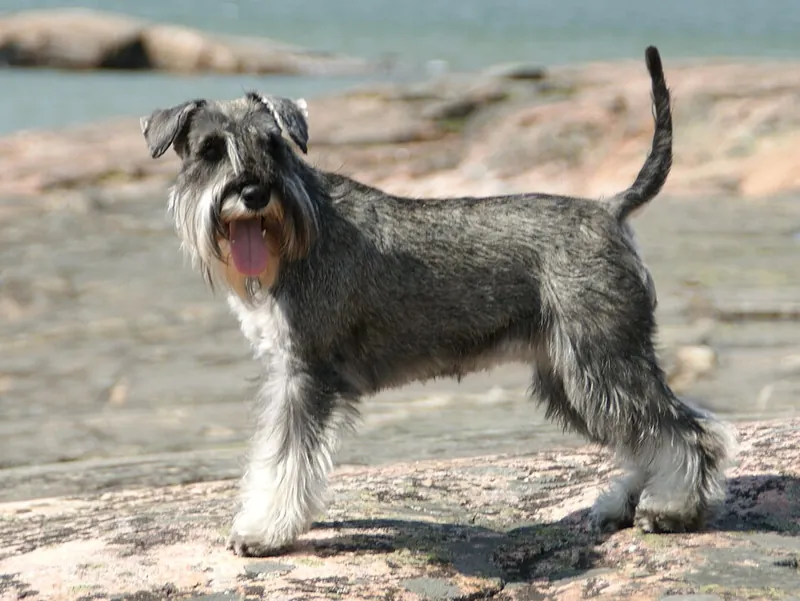
Miniature Schnauzer
Also known as: Zwergschnauzer, Schnauzer Nain, Schnauzer Miniatura, Schnauzer (Miniature)
The Miniature Schnauzer is a small dog breed from Germany. It was first developed for vermin control. It is known for being alert, loyal and playful.
What makes the Miniature Schnauzer unique
Here is how to recognize a Miniature Schnauzer.
Look-alike clues: bearded faces.
Where the Miniature Schnauzer comes from
The Miniature Schnauzer traces its roots to Germany, in the Western Europe region. It was bred for vermin control.
Registries that list it
- FCI, Group 2: Pinscher and Schnauzer, Molossoid and Swiss Mountain and Cattledogs, section Pinscher and Schnauzer type
- United Kennel Club, Terrier group
- Canadian Kennel Club, Terriers
- Verband für das Deutsche Hundewesen
See more dog breeds from Germany.
What kind of pet the Miniature Schnauzer makes
The Miniature Schnauzer is known for being:
Grooming, shedding and exercise
Miniature Schnauzer health and lifespan
The typical lifespan of the Miniature Schnauzer is 12 to 17 years.
Health conditions noted for the breed
Listed conditions are ones reported for the breed, not a prediction for any one dog. Talk with your vet about screening.
Miniature Schnauzer FAQ
Where does the Miniature Schnauzer come from?
The Miniature Schnauzer comes from Germany, in the Western Europe region.
How big does the Miniature Schnauzer get?
The Miniature Schnauzer stands about 12 to 14 in (30.5 to 35.6 cm) and weighs about 15 to 20 lb (6.8 to 9.1 kg).
How long do Miniature Schnauzer dogs live?
The typical lifespan is 12 to 17 years. McMillan et al., Scientific Reports reports a median lifespan of 13.3 years.
What was the Miniature Schnauzer bred for?
It was originally developed for vermin control.
Does the Miniature Schnauzer shed a lot?
No, it is a low shedder.
How much exercise does the Miniature Schnauzer need?
It is rated as high energy. The Canadian Kennel Club suggests up to 1 to 2 hours of exercise a day.
What health problems are common in the Miniature Schnauzer?
Conditions noted for the breed include von Willebrand disease, atopic dermatitis and portosystemic shunt.
Sources
Facts from Wikipedia are used under CC BY-SA 4.0.
- FCI breed nomenclature
- United Kennel Club breed groups
- Canadian Kennel Club breed standards index
- Canadian Kennel Club breed page
- Wikipedia
- Wikidata (CC0)
- Wikimedia Commons file page
- McMillan et al., Scientific Reports: Longevity of companion dog breeds (CC BY 4.0, Supplementary Table 3)
- FCI breed standard (PDF)